HO Scale vs N Scale – Which Is Better for Your Model Railroad?

Choosing the right scale is one of the first and most important decisions every model railroader has to make. Among all the available options, HO Scale and N Scale are by far the most popular, offering an excellent balance between realism, affordability, and product availability.
At first glance, the difference may seem simple: HO is larger, while N is smaller. In reality, the choice affects everything from the amount of space you’ll need to the type of scenery you can create and even the way you operate your trains.
If you’re wondering which scale is the better fit for your next project, here’s what you should consider before making your decision.
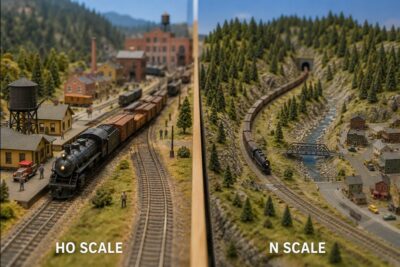 Size isn’t just about dimensions
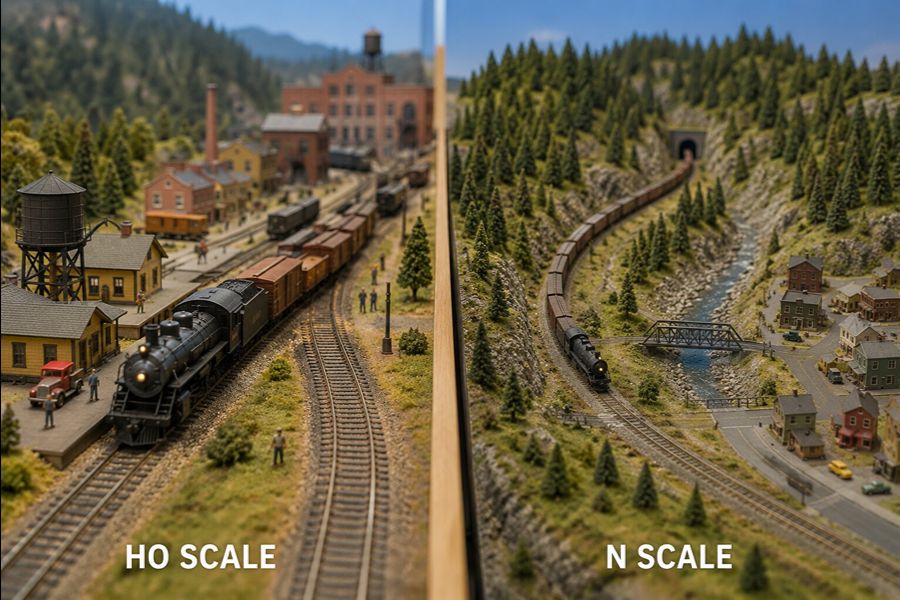
The most obvious difference between the two scales is their size. HO Scale is built at a ratio of 1:87, while N Scale uses a much smaller 1:160 ratio. This means an N Scale locomotive is almost half the size of its HO equivalent.
That difference may not sound dramatic on paper, but it has a huge impact once you begin designing a layout. Larger models make individual details easier to appreciate, while smaller models allow much longer rail lines and more expansive scenery within the same room.
The question isn’t simply which one looks better it’s how you want your miniature railway to feel.
How much space do you have?
For many hobbyists, available space becomes the deciding factor.
If you’re building a layout in a spare bedroom, basement, or dedicated hobby room, HO Scale offers plenty of opportunities to create a realistic railway with impressive detail. The larger trains are easier to see, easier to handle, and make maintenance much more comfortable.
On the other hand, if your layout needs to fit on a shelf, in a small apartment, or inside a compact hobby space, N Scale opens possibilities that would be difficult to achieve in HO. Longer main lines, broader landscapes, and larger towns suddenly become realistic without requiring additional floor space.
Rather than asking which scale is bigger, it’s often more useful to ask which scale makes the best use of the space you actually have.
Realism depends on more than scale
It’s easy to assume that larger trains automatically look more realistic, but that’s only part of the story.
HO Scale certainly allows for more visible details. Locomotives, buildings, figures, and weathering effects are easier to appreciate, making it a favorite among modelers who enjoy fine craftsmanship.
However, N Scale has its own advantage. Because everything is smaller, it’s possible to create sweeping landscapes, long bridges, winding valleys, and realistic train journeys that simply wouldn’t fit in the same space using HO Scale.
In many cases, the overall scene feels more authentic because the railway has room to breathe. Ultimately, realism comes from thoughtful design, convincing scenery, and careful detailing— not just the size of the models.
Cost: More than just buying trains
Many beginners assume one scale is always cheaper than the other, but the reality is more nuanced.
Individual HO locomotives and rolling stock often offer excellent value thanks to the enormous number of products available. Replacement parts, scenery items, and accessories are also widely available from many manufacturers.
N Scale equipment can sometimes be similarly priced, although highly detailed models may cost just as much as their HO counterparts. The real savings often come from the layout itself. Since N Scale requires less space, you may spend less on benchwork and still create an impressive railway.
Instead of comparing the price of a single locomotive, think about the overall cost of the complete layout you hope to build.
Which scale is easier for beginners?
For someone entering the hobby, HO Scale is generally considered the easier option. The larger size makes locomotives easier to handle, track cleaning is simpler, and installing details such as figures, signals, and lighting is less demanding. The huge selection of compatible products also makes it easier to expand your layout over time.
That doesn’t mean beginners should avoid N Scale. Many hobbyists start with it successfully, especially when space is limited. It simply requires a little more patience and precision when handling the smaller components.
Which one should you choose?
If your goal is to build a highly detailed layout where individual scenes become miniature works of art, HO Scale is difficult to beat. Its popularity means you’ll find countless products, accessories, and inspiration for almost any type of railway you want to recreate.
If your dream is to watch long freight trains travel through sweeping landscapes without dedicating an entire room to your hobby, N Scale may be the better choice. Its compact size allows you to create impressive layouts that would otherwise require much more space.
Neither scale is objectively better they simply excel in different situations.
The debate between HO Scale and N Scale has existed for decades, and the truth is that both are excellent choices. The best decision depends on your available space, your budget, the level of detail you enjoy, and the kind of railroad you imagine building.
Before buying your first locomotive, take a moment to think about the layout you hope to create five years from now, not just the train you want today. Planning ahead will help you choose a scale that continues to suit your needs as your skills and collection grow.
Whichever scale you choose, the real satisfaction comes from designing a miniature world that reflects your creativity, patience, and passion for model railroading.