How to Build Realistic Model Railroad Mountains and Terrain

A well-designed mountain range can completely transform a model railroad layout. More than just a backdrop, realistic terrain gives your railway a sense of place, guiding the tracks naturally through valleys, across rivers, and into tunnels. Even a relatively simple layout becomes far more convincing when the landscape feels like it could exist in the real world.
The good news is that creating impressive mountains doesn’t require years of experience. With careful planning, the right materials, and a focus on natural shapes, you can build scenery that adds depth, realism, and character to your miniature railway.
Think about the landscape before you build
One of the most common mistakes is treating mountains as something to add after the tracks have already been installed. In reality, the landscape should help define the railway from the very beginning.
Real railroads rarely follow perfectly flat ground. They weave through hills, cut across valleys, and disappear into tunnels where the terrain demands it. Before shaping your scenery, take a moment to imagine how the railway would have been built if it existed in the real world. This simple shift in perspective often leads to far more realistic designs.
Start with the basic shape
Every mountain begins with a strong foundation. Many hobbyists use lightweight foam boards, cardboard strips, or other simple framework materials to create the overall shape before applying the final surface.
The goal isn’t to build perfect peaks but to create natural variations in height and slope. Real mountains are irregular, with gentle ridges, steep rock faces, and subtle changes in elevation that make the landscape feel authentic.
Stepping back regularly while building allows you to see the overall composition and adjust the terrain before adding fine details.
Add texture and rock formations
Once the basic shape is complete, it’s time to give the landscape its character.
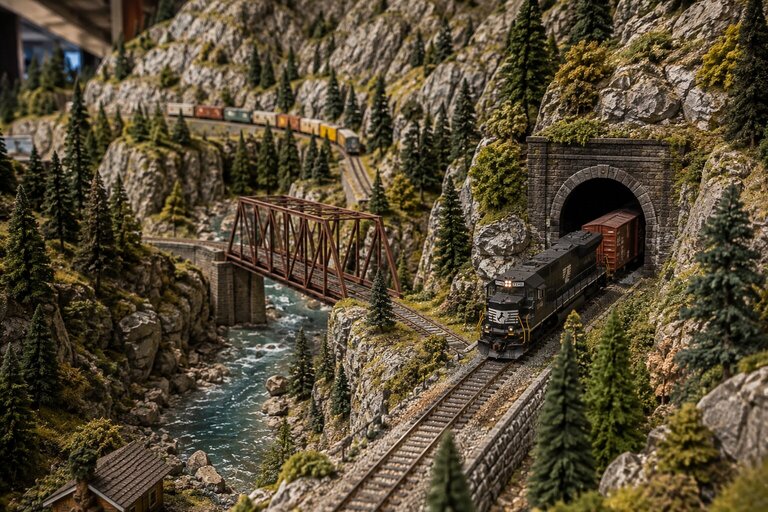
Rock faces are among the most eye-catching features of any model railroad. Whether you use commercial rock molds or carve them by hand, the key is avoiding repetitive patterns. Nature is wonderfully unpredictable, and your scenery should reflect that.
Adding layers of color, subtle weathering, and different shades of gray and brown helps create depth. Small cracks, exposed stone, and uneven surfaces make even modest scenery appear much more realistic.
Blend the railway into the environment
One of the secrets to convincing scenery is making the railway feel like it belongs within the landscape rather than sitting on top of it.
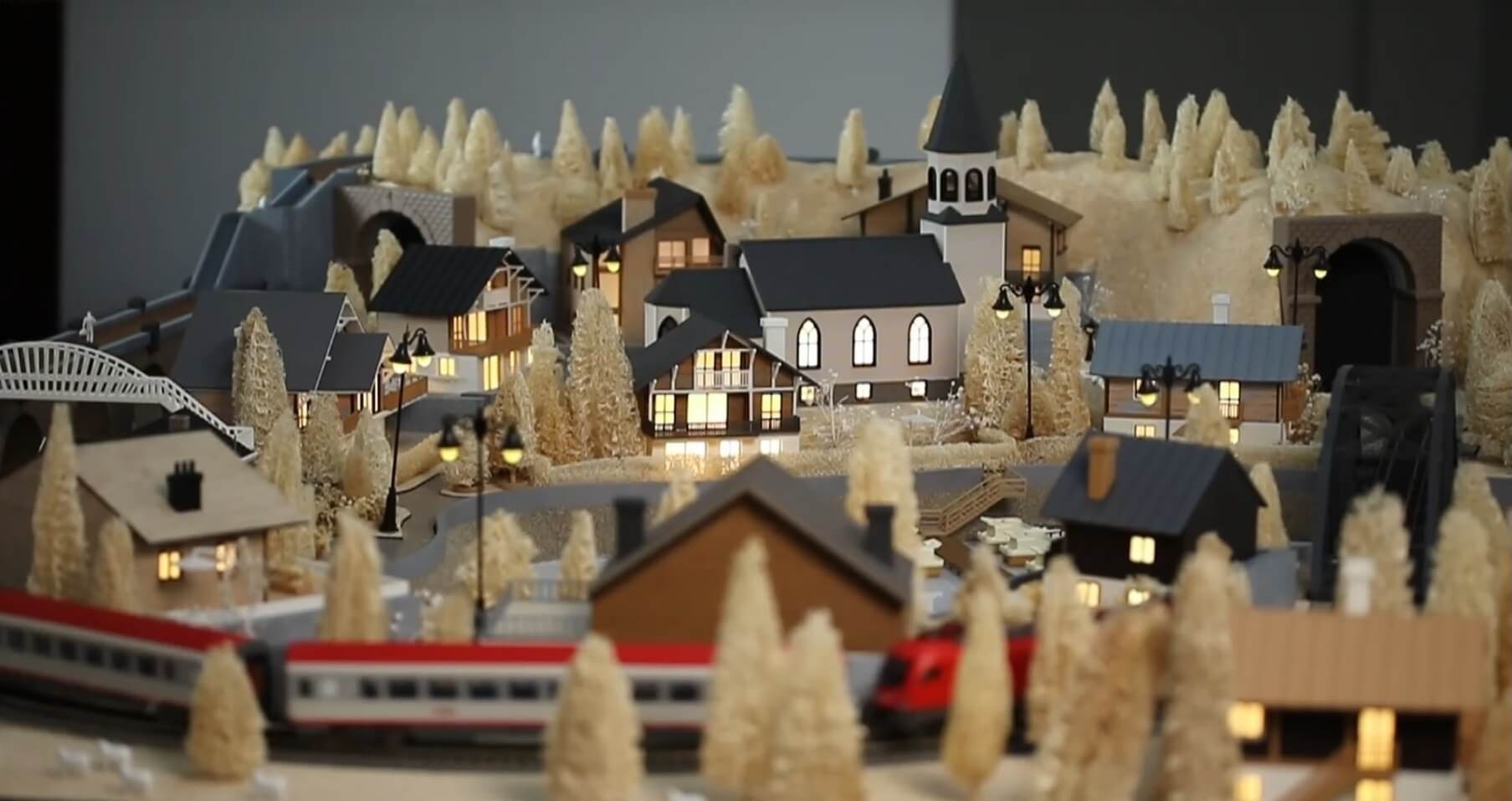
Cuttings, retaining walls, tunnels, bridges, and embankments all help integrate the tracks naturally into the terrain. A tunnel entrance carved into a rocky hillside or a bridge crossing a narrow river creates visual interest while giving the impression that the railway was carefully engineered to overcome natural obstacles. The landscape should support the railway not compete with it.
Bring the terrain to life
Once the mountains are shaped, vegetation transforms bare scenery into a living environment.
Different heights and textures create the most convincing results. Dense forests on distant hillsides, patches of grass along the tracks, scattered bushes, and exposed rocky areas all contribute to a balanced landscape.
Instead of placing trees at equal distances, vary their size and spacing. Nature rarely follows straight lines, and these small imperfections make a surprisingly big difference.
Adding a winding stream, a quiet country road, or a small cabin tucked into the hillside can also help tell a story and make the entire scene feel more immersive.
Small details make a big difference
It’s often the smallest elements that visitors notice first. Weathered tunnel portals, fallen rocks near the tracks, wooden fences, hikers on a mountain trail, or maintenance workers inspecting a bridge all add subtle realism without overwhelming the scene.
These details encourage viewers to spend more time exploring the layout, discovering something new each time they look. Rather than filling every empty space, focus on creating a few memorable scenes that naturally draw the eye.
Be patient and build in layers
Creating realistic terrain is a gradual process. Mountains develop over multiple stages, from shaping and texturing to painting, vegetation, and final detailing. Working slowly allows each layer to complement the next and gives you the opportunity to adjust colors, textures, and composition as the landscape evolves.
Some of the most impressive modelhttps://lokomote.com/ railroad layouts were built over months or even years, with scenery constantly refined as new ideas emerged. Patience is often the ingredient that separates a good layout from a truly exceptional one.
Realistic mountains and terrain do much more than improve the appearance of a model railroad—they create atmosphere, tell stories, and give purpose to the railway itself. By observing real landscapes, using natural shapes, and adding carefully chosen details, you can transform even a simple layout into a miniature world full of depth and character.
Whether you’re designing a dramatic mountain pass, a quiet countryside branch line, or an industrial railway winding through rocky hills, thoughtful terrain design will always make your layout more engaging and believable.
At Lokomote, we believe every memorable model railroad begins with a carefully designed landscape. From rugged mountain ranges and detailed rock formations to realistic vegetation and handcrafted scenery, every element works together to create a miniature world that feels authentic from every angle.
Explore our latest projects and discover how thoughtful design and expert craftsmanship bring realistic model railroads to life.