Model Railroads – From Hobby to Art

Why model railroads can be interior design statement pieces
For decades, model railroads occupied a peculiar cultural space relegated to basements, associated with childhood nostalgia, dismissed as hobbies rather than art. That perception is experiencing a dramatic reversal.
Today’s discerning collectors recognize what museums have quietly known for years: a meticulously crafted model railroad transcends its functional origins to become kinetic sculpture. Unlike static art that hangs motionless on a wall, these miniature landscapes pulse with life. Trains glide through hyper-realistic terrain. LED lighting shifts to mimic the passage of time. Architectural details reward close inspection with discoveries that reveal themselves slowly, over repeated viewings.
This is not children’s play. This is sophisticated art that happens to move.
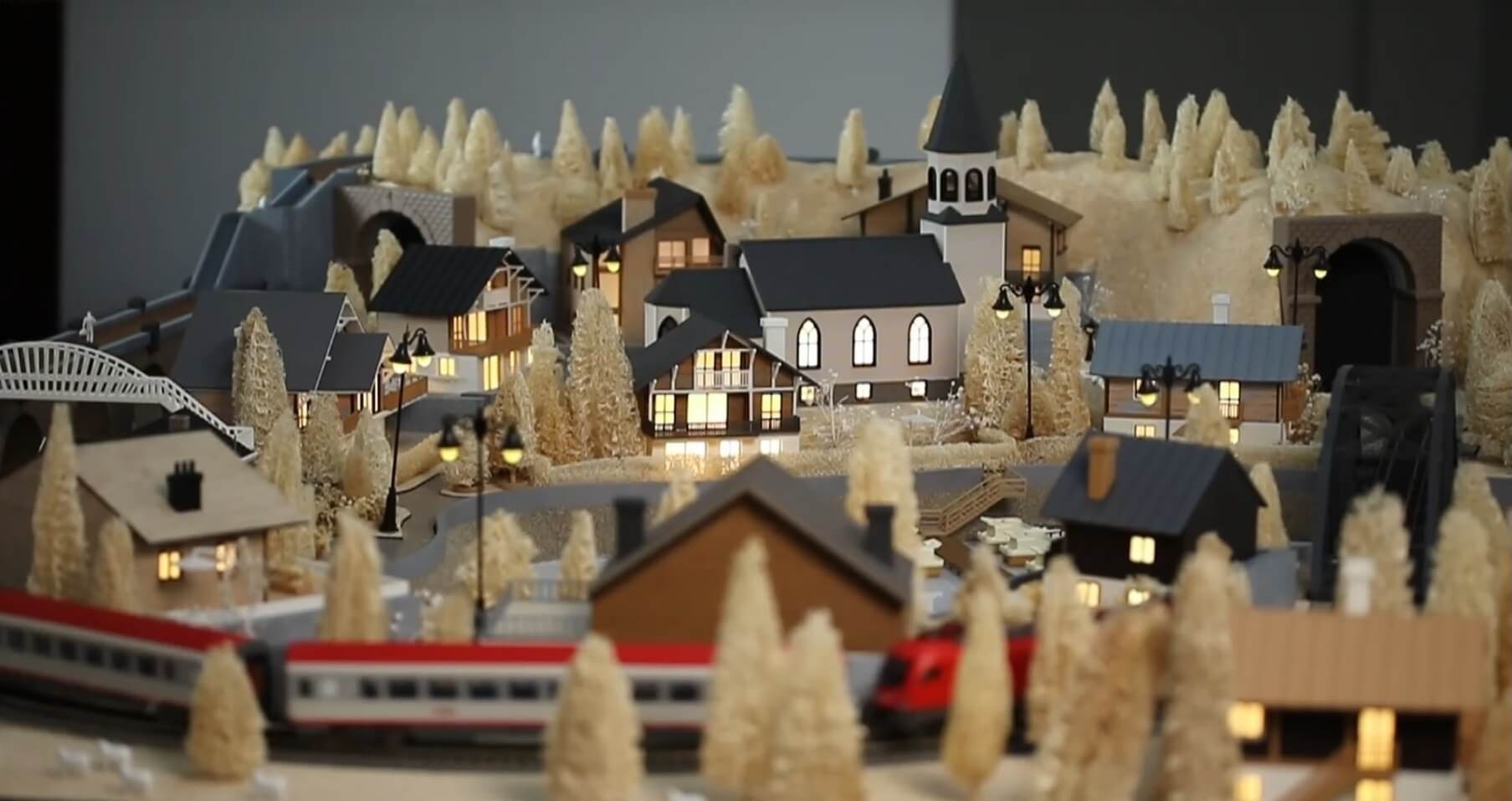
The contemporary model railroad occupies the same aesthetic territory as fine watchmaking or art glass—objects where technical mastery and visual beauty converge. When a handcrafted locomotive navigates a perfectly scaled alpine pass, complete with weathered stone bridges and villages rendered in painstaking detail, you’re witnessing the intersection of engineering precision and artistic vision. It’s functional sculpture that transforms space not through size, but through intricacy and movement.
The aesthetic value: High-end Dioramas as conversation architecture
Traditional statement pieces announce themselves through scale. A model railroad achieves the opposite—it draws viewers closer, inviting intimate examination rather than demanding attention from across the room.
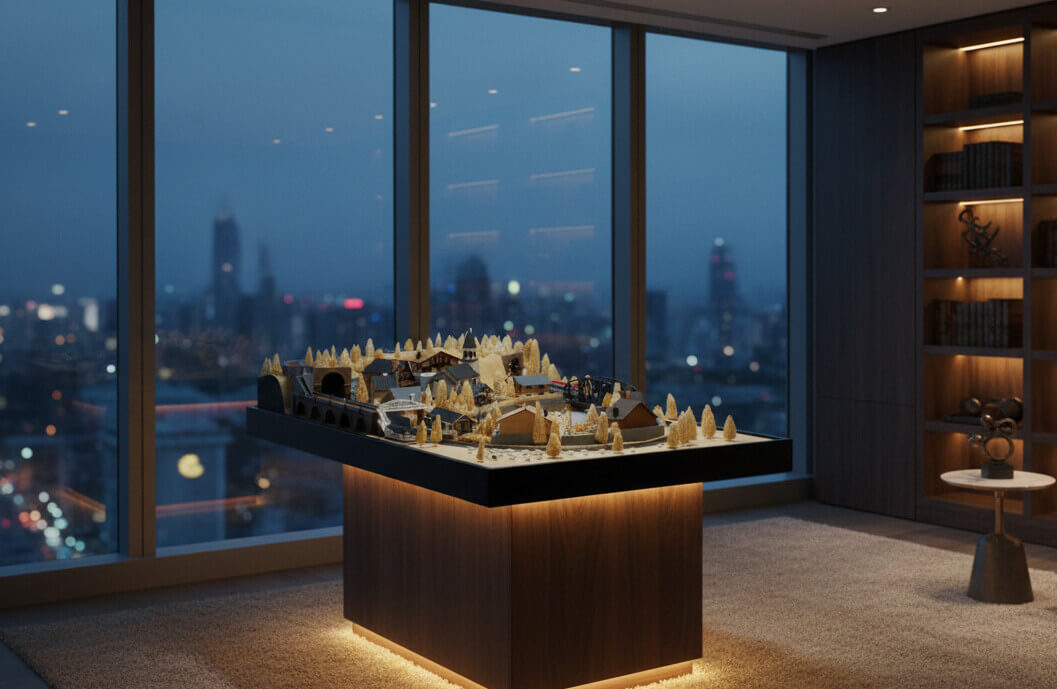
In executive office decor, this quality proves particularly valuable. A high-end diorama positioned behind a desk or integrated into built-in shelving creates visual interest that subtly communicates taste and attention to detail. Clients and colleagues don’t simply glance and move on. They approach. They lean in. They ask questions.
The conversation that follows reveals more about the owner than any credential on the wall ever could. It signals patience, appreciation for craftsmanship, and the confidence to display something unexpected in a professional environment.
Material quality as design language
Premium model railroads and miniature landscapes speak through their materials:
- Architectural frameworks in hardwood and metal rather than plastic enclosures. The bases themselves function as furniture—crafted from walnut, oak, or powder-coated steel with the same consideration given to any piece occupying a modern interior.
- Museum-quality glazing protects the landscape while remaining visually invisible. Low-iron glass eliminates the greenish tint of standard panels. UV filtering preserves colors and prevents deterioration. The enclosure becomes part of the presentation, not an apologetic necessity.
- Sophisticated lighting systems that do more than illuminate. Programmable LEDs create dawn transitions, sunset warmth, and nighttime ambiance. Buildings glow from within. Streetlamps cast realistic pools of light. The diorama becomes a living painting that shifts mood throughout the day.
These material choices position model railroads firmly within the design vocabulary of contemporary interiors—alongside Italian furniture, art photography, and architect-designed lighting rather than in competition with them.
The emotional dimension: Slow living in miniature
There exists a particular kind of calm in watching something move at precisely the speed it should—no faster, no slower. A model train completing its circuit provides this satisfaction in concentrated form.
The experience offers what psychologists term “soft fascination”—engagement that captures attention without demanding it, allowing the mind to process background concerns while remaining present in the moment. This is the same quality that makes aquariums therapeutic, fireplaces mesmerizing, and Japanese rock gardens conducive to contemplation.
For professionals operating in high-velocity environments where every minute fragments into competing priorities, a miniature landscape offers rare permission to simply observe. The train will complete its journey regardless of your attention. There are no notifications to check, no decisions to make, no optimization to pursue. Just motion, detail, and the satisfaction of hyper-realistic craftsmanship revealing itself gradually.
Narrative Without Words
Every high-end diorama tells a story through its details. A weathered barn suggests decades of agricultural use. A train station at dusk implies commuters heading home. A mountain pass in winter speaks to both isolation and the triumph of infrastructure over geography.
These narratives operate subtly, never forcing interpretation but rewarding attention with layers of meaning. The emotional connection forms not through dramatic revelation but through accumulating observations—noticing the position of shadows, the way vegetation clusters near water sources, the logic of road placement through difficult terrain.
This is art that respects intelligence. It assumes viewers capable of constructing meaning from visual information rather than requiring explanatory text. The landscape exists. The train moves. Everything else emerges from observation.
Why Lokomote: Masterpieces without the decade of construction
- The traditional barrier to entry
Historically, owning a museum-quality model railroad required one of two paths: commissioning a custom build at extraordinary expense, or investing years in acquiring the skills to construct one yourself. Both options placed these pieces beyond the reach of most collectors who appreciated the art form but lacked either unlimited budgets or unlimited time.
Ready-to-run model railroads eliminate this barrier without compromising quality. Lokomote approaches creation as curators rather than hobbyists—selecting themes, designing layouts, and executing builds with the same rigor applied to any fine art production.
The result is immediate ownership of what would otherwise require years of specialized knowledge to achieve. The craftsmanship remains exceptional. The materials stay premium. The attention to architectural accuracy and scenic detail matches what dedicated enthusiasts spend careers perfecting. The difference is delivery time: weeks instead of years.
- Bespoke precision, ready for display
Each piece arrives as a complete installation—landscape, track, lighting, and rolling stock integrated into a cohesive presentation. Protective glazing is already fitted. Electrical systems are tested and certified. The base is finished to furniture standards.
This approach recognizes that most collectors value the result rather than the process. They want the meditative presence of a miniature world in their space, not a multi-year construction project. They seek the conversation-starting impact of kinetic art, not the hobby of model building.
Lokomote serves this audience by treating model railroads and miniature landscapes as what they’ve always deserved to be recognized as: legitimate art objects worthy of thoughtful curation, professional presentation, and placement in environments where design matters.
The modern collector’s medium
Why now? Why Model Railroads?
Several cultural shifts explain the rising status of high-end dioramas among collectors:
The experience economy values presence. In an era where most entertainment and art exists digitally, objects with physical presence and tangible craftsmanship carry renewed significance. A model railroad cannot be downloaded, replicated infinitely, or experienced through a screen. It exists in space. It requires presence.
Nostalgia is being recontextualized. Rather than retreating from childhood memories, contemporary design embraces them through elevated execution. The same cultural moment that celebrates artisan chocolate, heritage cocktails, and vinyl records also permits reconsideration of what “toy trains” can become when approached as serious craft.
Minimalism is evolving. After years of aggressive decluttering, design conversations are shifting toward “meaningful maximalism”—curated collections of objects that earn their space through beauty, craftsmanship, or emotional resonance. A carefully chosen model railroad satisfies this criteria more effectively than most art forms.
Investment beyond financial returns
While quality pieces appreciate over time—particularly limited editions and historically significant themes—the primary return on a model railroad investment isn’t monetary. It’s environmental.
These pieces change how a room feels. They provide focal points for contemplation. They create conversation. They remind inhabitants daily that craft, precision, and beauty still matter in an age of mass production and algorithmic content.
For collectors building environments that reflect their values, a premium model railroad serves the same function as a significant artwork—it articulates a worldview through aesthetic choices. The difference is the addition of movement, which transforms static beauty into something alive.
Miniature worlds, maximum Impact
The trajectory is clear: model railroads have completed their journey from basement hobby to legitimate art form. Museums collect them. Design publications feature them. Architects incorporate them into high-end residential and commercial spaces.
This evolution reflects broader recognition that artistic merit doesn’t correlate with size, and that kinetic sculpture need not occupy gallery-scale footprints to command serious attention. A superbly executed miniature landscape—whether depicting Alpine villages, industrial rail yards, or coastal branch lines—achieves what all meaningful art accomplishes: it creates a world complete unto itself, inviting viewers to step outside their concerns and enter something carefully constructed, deliberately paced, and unexpectedly moving.
For those seeking interior design statement pieces that combine visual sophistication with emotional resonance, ready-to-run model railroads represent perhaps the most underutilized category in contemporary collecting. They exist at the intersection of sculpture, architecture, and narrative art—occupying a unique position no other medium can claim.
The question isn’t whether these pieces belong in modern interiors alongside established art forms. Increasingly, the question is why they were ever considered anything less.
Explore the Lokomote Collection
Discover how ready-to-run model railroads and miniature landscapes can transform your space into something that invites contemplation, sparks conversation, and rewards daily observation with layers of hyper-realistic craftsmanship.