Custom Model Railroad Layout — Cost, Design & Process Guide

For many people, a model railroad layout starts as a hobby. But for others, it becomes something more a statement piece, a personal project, or even a long-term investment in a unique display environment.
Custom model railroad layouts sit exactly at this intersection. They are not pre-built kits or off-the-shelf products, but carefully designed miniature worlds, created from scratch to match a specific vision. If you’re considering one, there are three essential aspects to understand: cost, design, and process.
How much does a custom model railroad layout cost?
There’s no fixed price for a custom layout — and that’s because no two projects are the same.
The final cost depends on several factors:
- Size and scale (HO scale being the most common)
- Complexity of the track system
- Level of architectural detail
- Integration of lighting and electronics
- Custom elements such as terrain, structures, and scenery
Smaller, simpler layouts may start in the lower range, while larger, fully detailed environments can reach several thousand dollars or more. What matters most is not just the materials, but the time and craftsmanship behind each piece. A custom layout is built step by step designed, assembled, wired, tested, and refined often over weeks or months.
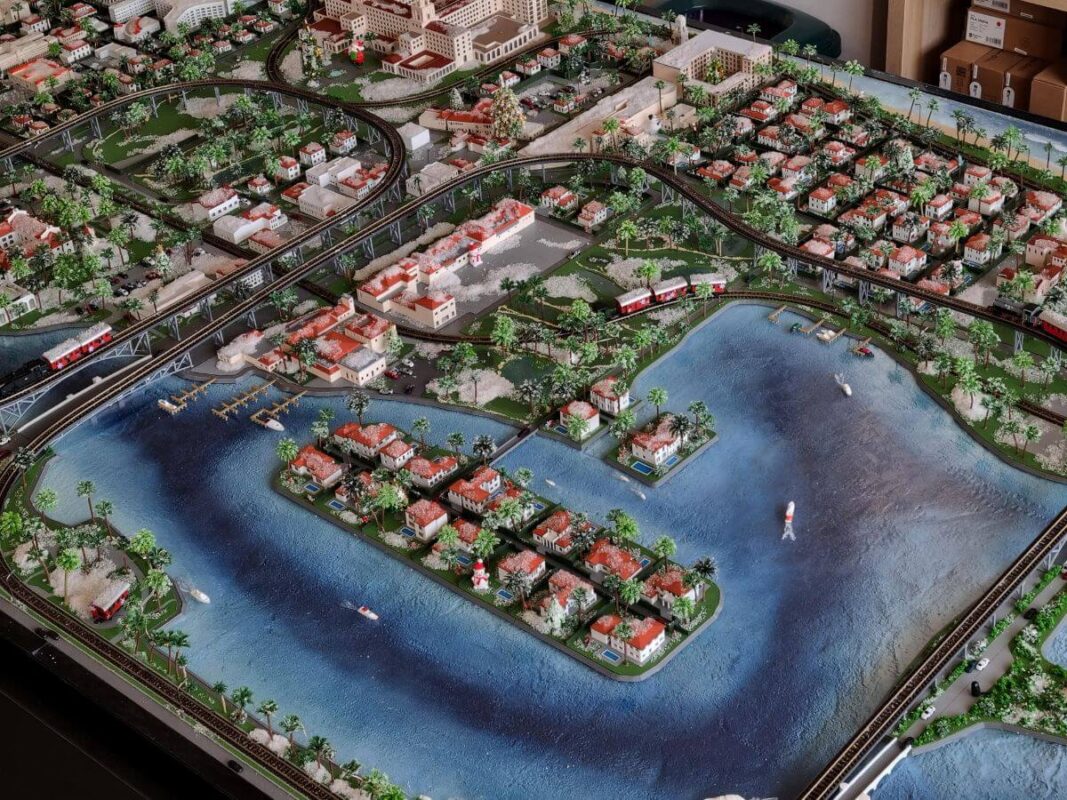
The design phase — Where everything begins
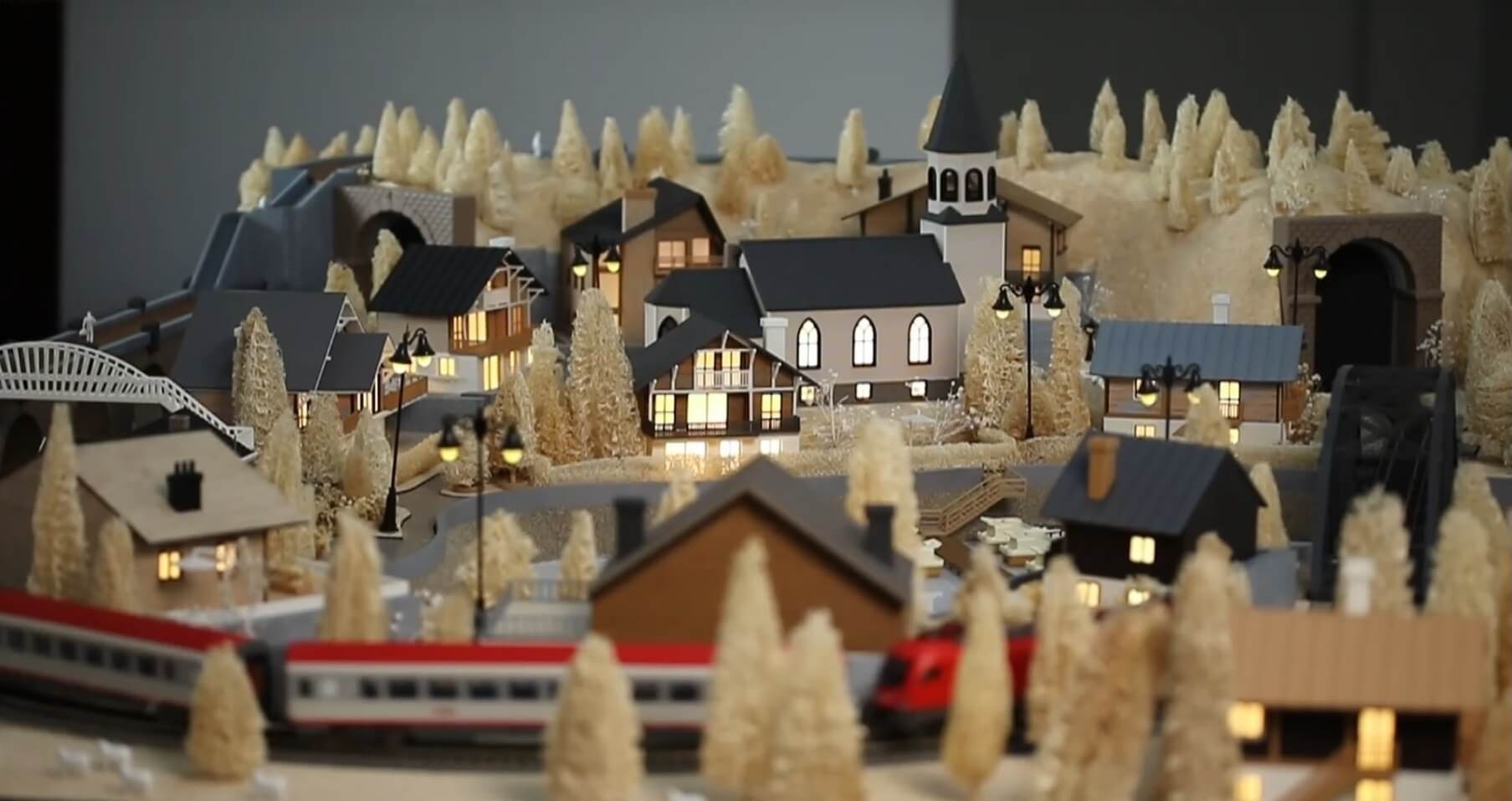
Every custom layout starts with a concept. Some clients come with a clear idea, a Swiss alpine village, an industrial district, or a modern rail system. Others begin with a general direction and develop the concept together with the builder. During the design phase, key decisions are made:
- Overall layout dimensions
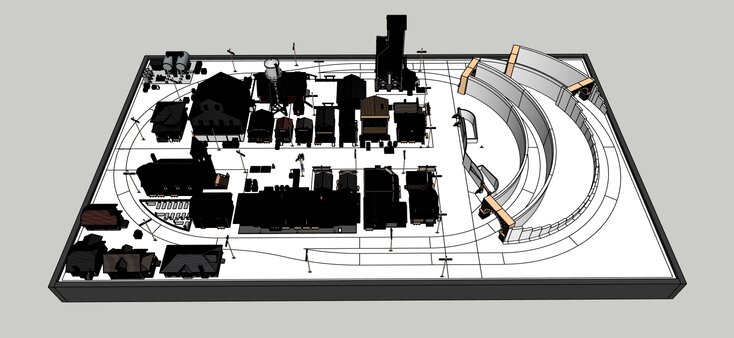
- Track plan and train movement
- Architectural style and theme
- Placement of buildings, terrain, and infrastructure
- Lighting and operational elements
This stage is critical. A well-planned layout ensures not only visual balance, but also smooth and reliable operation. At its best, the design phase feels less like technical planning and more like shaping a miniature world.
The build process — From structure to detail
Once the concept is finalized, the actual build begins. The process typically follows a structured sequence:
- Base construction and structural support
- Track installation and testing
- Terrain shaping and landscape formation
- Placement of buildings and architectural elements
- Electrical wiring for lighting and train operation
- Detailing, weathering, and finishing touches
Each layer adds depth and realism. At this stage, the layout slowly transitions from a technical structure into something far more expressive a living scene where movement, light, and architecture work together.
Beyond the Hobby — A different approach
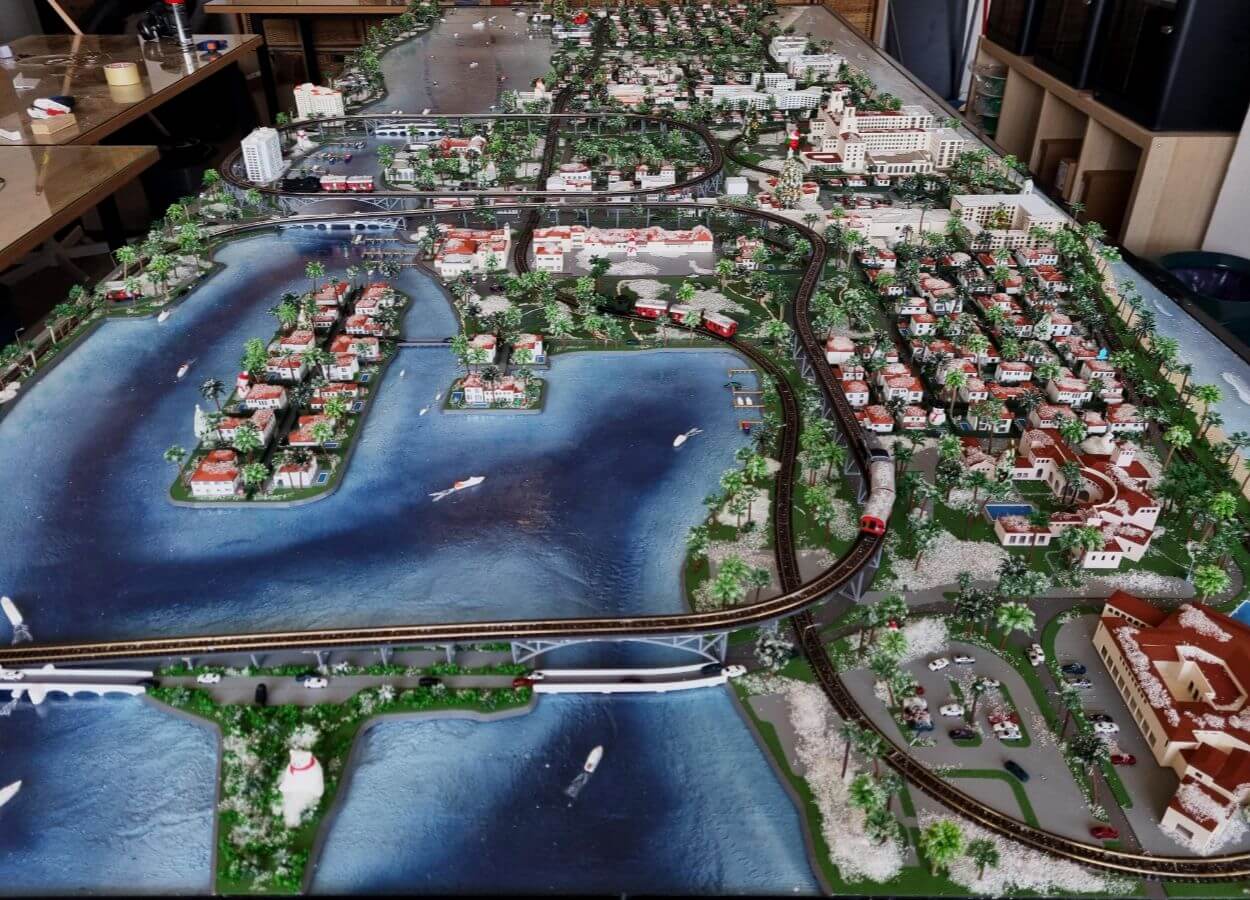
In recent years, custom layouts have evolved beyond traditional hobby builds. Some studios now approach them as complete design objects combining engineering, architecture, and visual composition into a single piece. Instead of focusing only on train operation, the entire layout is treated as an environment: something that can be displayed, experienced, and integrated into a space.
This shift changes how layouts are perceived. They are no longer just collections of tracks and buildings, but curated miniature worlds with presence and identity.
What to expect as a client
Working on a custom layout is a collaborative process. It usually involves:
- Initial discussion and concept definition
- Design proposal and layout planning
- Build phase with progress updates
- Final delivery of a fully assembled piece
In most cases, the layout arrives ready for placement, with all systems tested and integrated.
Final thoughts
A custom model railroad layout is not something you buy impulsively. It’s something you commission, refine, and ultimately own as a unique piece. Whether placed in a private collection, an office, or a dedicated display space, it becomes more than just a model it becomes a miniature world with its own logic, movement, and atmosphere.
For those who appreciate detail, craftsmanship, and design, it offers a rare combination: engineering precision and visual storytelling in one cohesive form.
To see how custom layouts come to life as finished display pieces, explore the available editions HERE.