Realistic Model Railroad Layout

Creating a realistic model railroad layout involves far more than placing tracks and buildings on a board. It requires a thoughtful balance between design, proportion, and detail, all working together to form a believable miniature environment. The most convincing layouts are those that recreate not just the visual aspects of a real railway, but also its structure, logic, and atmosphere.
One of the most important factors is consistency. Every element within the layout must respect the chosen scale. Buildings, vehicles, figures, and infrastructure need to align proportionally to maintain visual coherence. Even small inconsistencies such as oversized details or mismatched architectural styles, can break the illusion and make the scene feel artificial rather than immersive.
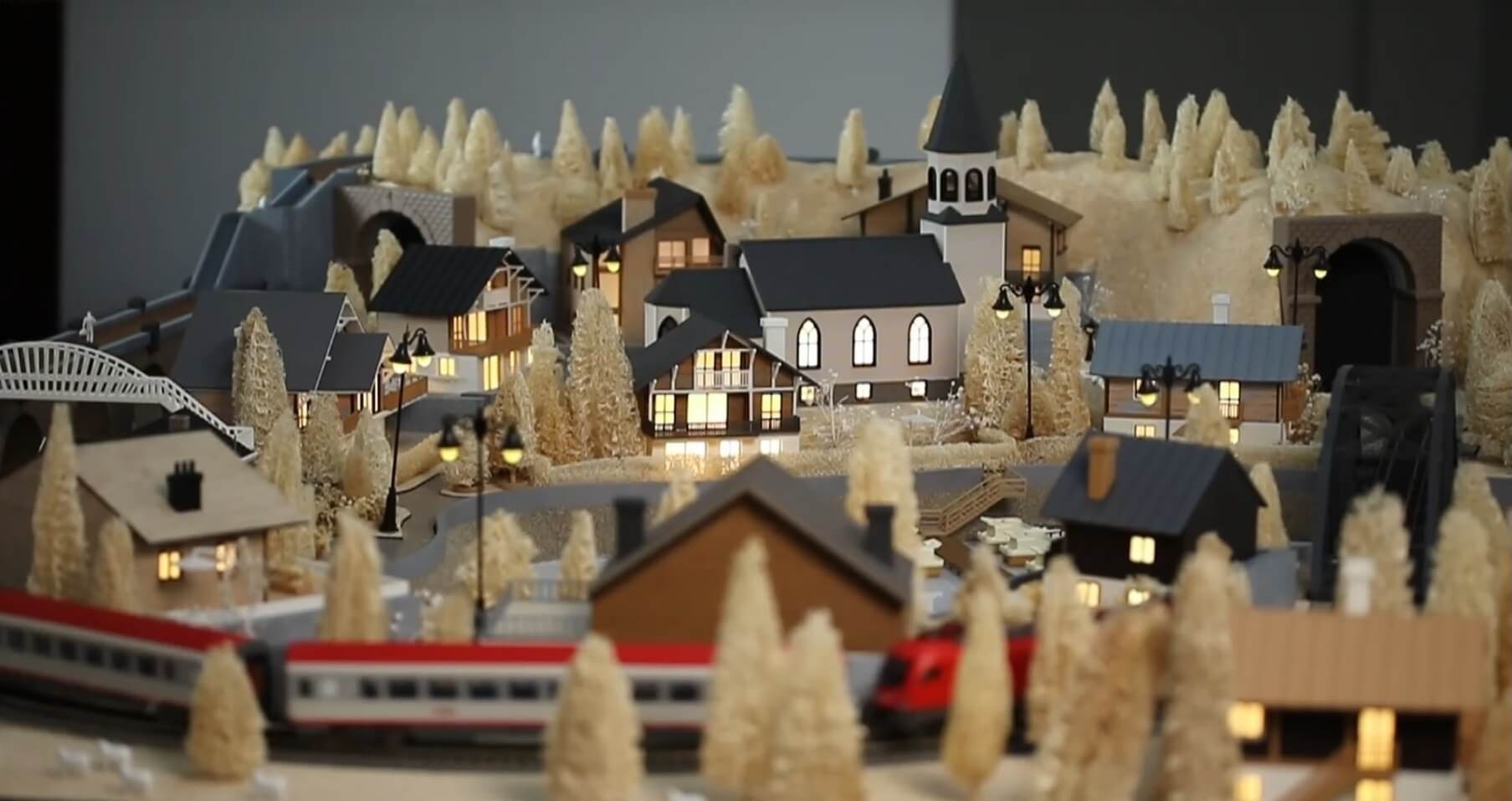
Another key element is layering. Real-world environments are never flat; they are composed of multiple visual layers that create depth and perspective. Effective layouts use terrain elevation, structures, vegetation, and background elements to establish a natural flow from foreground to horizon. This technique helps transform a limited physical space into a visually expansive environment.
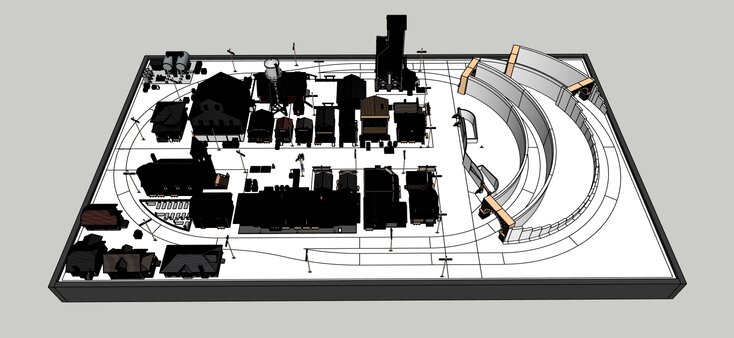
Track design also plays a critical role in realism. Instead of simple loops, more advanced layouts incorporate sidings, switching areas, and operational zones that reflect real railway behavior. The way trains move through the environment — slowing down, stopping, or interacting with industrial areas contributes significantly to the overall authenticity.
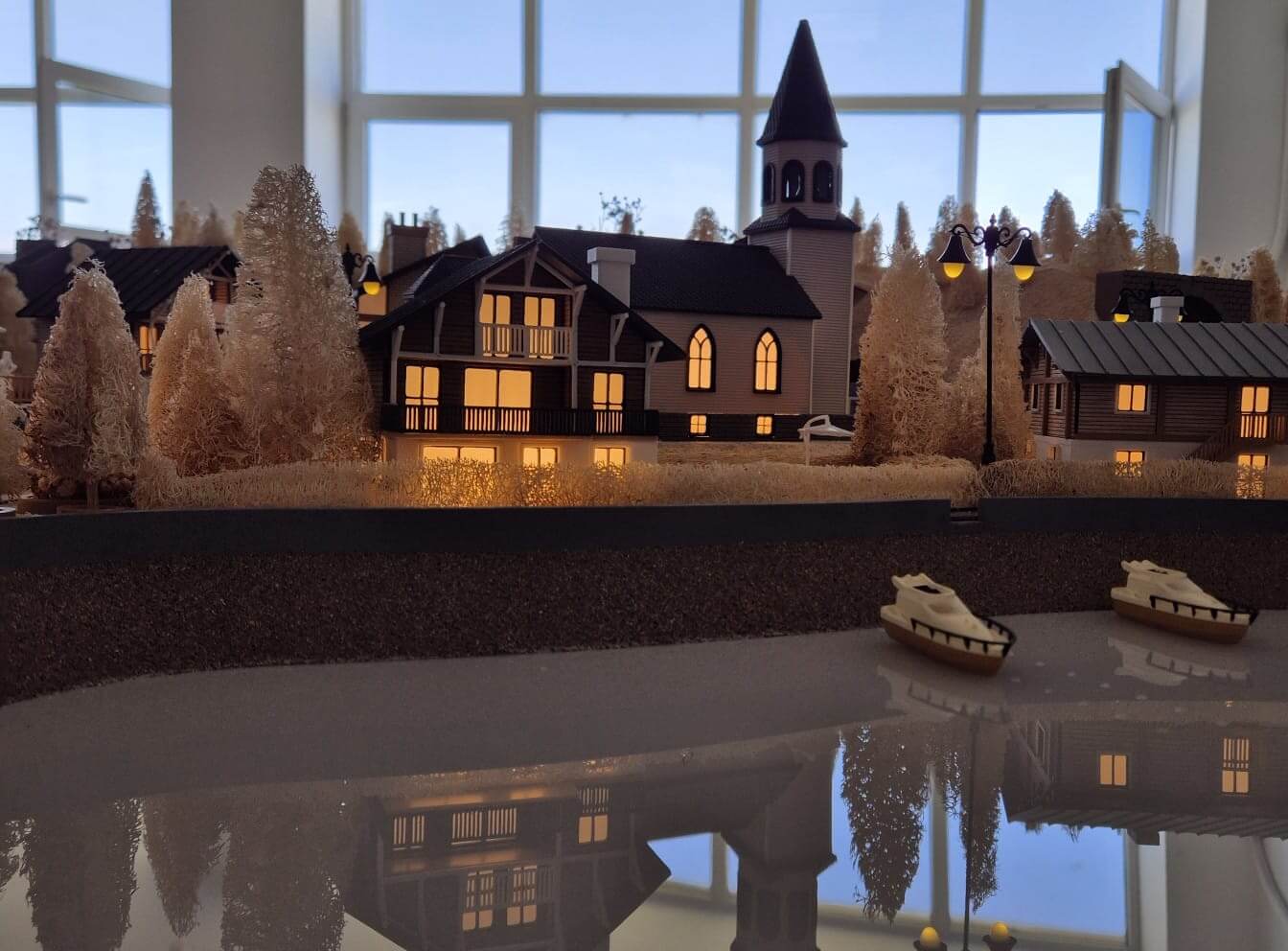
Lighting is another essential component. Integrated lighting inside buildings, street lamps, and industrial areas adds atmosphere and enhances the perception of scale. Subtle variations in light intensity and color can dramatically change how a layout is experienced, especially in low-light conditions where details become more pronounced and cinematic.
Material treatment and weathering further elevate realism. Surfaces that appear too clean or uniform can reduce authenticity. By introducing textures, aging effects, and slight imperfections, builders can replicate the wear and tear found in real environments, making the layout feel more grounded and believable.
In recent years, the concept of the model railroad layout has expanded beyond traditional hobby projects. Some creators now approach layouts as fully designed environments, where trains, architecture, and infrastructure form a unified system. Studios such as Lokomote focus on building immersive railway worlds that function both as operational systems and as refined display pieces.
Ultimately, realism is achieved when all elements, track design, scenery, lighting, and motion work together seamlessly. The most successful layouts are those that feel alive, capturing not only the appearance but also the function and rhythm of real-world railway environments.
For those looking to explore professionally built layouts, you can view available HO scale model railroad layouts here.